Author of Blog: Daniel Day

Wednesday, July 6, 2016

Anatomy of a Bus Stop Sign

In my travels I have encounter a lot of bus stop signs and the more I see the many different designs, the more I'm grateful for the design of VIA's.

So what should be seen on a bus stop sign?  These are the 5 characteristics that every bus stop should have.

1. It should be recognized as a bus stop 
2. It should be seen from both sides. 
3. It should have the routes listed.   
4. It should have a serial number. 
5. It should have the times when the bus comes.

It is these 5 things that make a great bus stop sign. But sadly, most systems fail to have at least 2, and more just have a lousy sign.  On this page name the Transit System Bus Stops, you'll find a list of all the bus stop signs that I have encountered and my rating for those system bus stops.

1. It should be recognized as a bus stop.
Bus stops come in many designs, the most common features a figure of a bus on the sign. Others have the logo of the transit system. But anyone who's walking along the street should look up at the sign and realize that a bus stops at this location. (Image 55.1)
55-1


2. It should be seen from both sides.
This should be a given and it is in San Antonio, that you're able to walk down a street and look at the other side and see that there's a bus stop.  But sadly in other cities, this is not the case.  If you're walking down the street in another city, you come up to a blank grey sign, a tragic part of using public transit. Look at the picture below and tell me if you can see the bus stop. (Image 55.2)
55-2

3. It should have the routes listed. 
(Image 55.3) Now you would think that this would be a given, but no. At most, you just have a sign that indicates that a bus stops here, and no more. Other systems like VIA in San Antonio always have the number of what bus route stops at a particular stop. Having this simple indication goes along way with easing people's fears.  It also helps when having Skip Stop Buses, buses that serve the same street as another route, but bypasses several stops to have faster service. 
55-3

4. It should have a serial number.  
Again, every bus stop sign in San Antonio has a five digit number on the bottom of the bus stop. (Image 5.4)  It's like a bar code that list a particular stop telling what bus routes stop at that stop and the location it is at.  Other cities do have a serial number for a bus stop, but it is listed on the app and not the bus stop sign.  Houston is going this way, but it will be a while until we see it listed on all the bus stop signs.  But having every stop with a unique serial number can backfire. At the many transit centers in San Antonio, VIA has a different serial number for each bus stop sign at their transit centers.  At Randolph Park And Ride, the 550 will have bus stop number 59883 while the 21 will have 59886.  It makes it hard when using the VIA's 52020 text feature or trying to find the exact bus stop on google maps.  I hope the people at VIA reading this will fix this problem so we all can text to 52020 with one bus stop number for Randolph and get all the routes and when they're schedule to arrive and depart.  

55-4

5. It should have the times listed when the bus comes.
Sadly, a lot of systems fail to do this.  Whether it's because of money, or they just haven't figure out how to do it, all bus stop signs should have the schedule listed of the bus route that stops there.  In my travels, I've seen many examples, but they fail to solve the problem of putting the schedule on all the stops. In Charlotte, North Carolina, on the CATS System seem to have solved this dilemma.  Although all the bus stops fail to have a serial number, (Image 55.6) they all however have the times listed on the pole of when the bus is coming.(Image 5.5)

55.5


55.6


So for my home transit system in San Antonio, TX, you do a great job and I hope that those who are reading this will try to improve our bus stop signs and the way they are cataloged.  For everyone else, I hope you use these standards and improve your bus stop signs so you can bring your system into the 21st century.

Images:
55.1:  Fort Smith Transit Bus Stop. http://www.fortsmithar.gov/transit/default.aspx
55.2:  Fort Smith Transit Bus Stop as seen from across the street.
55.3:  Houston Metro Bus Stop. http://www.ridemetro.org/Pages/index.aspx
55.4:  VIA Metropolitan Transit Bus Stop. http://viainfo.net/Ride/Default.aspx
55.5:  A time Strip seen on the side of a CATS bus stop pole
55.6:  CATS: Charlotte Area Transit System. http://charmeck.org/city/charlotte/cats/Pages/default.aspx

Friday, May 20, 2016

VIA fixes Fiesta Disaster

54.1
Every year we have two big parades in downtown San Antonio, and every year it was always a pain to get to work on those days by bus. I wrote about this in my blog last year in Advice on Improving VIA Part II, number 5. This is due to the fact that every year, VIA reroutes the buses and have them turn around at a handful of locations around downtown. So if you are use to riding the 34 which turns into the 2 to catch the 96, well you're out of luck and you will be required to walk from the turn around stop at Nueva and St Mary's and walk all the way to Travis Park. Imagine doing this with a walker?  And that's what I thought I would be doing this year, filming myself walking from one bus stop to the other bus stop across the Battle of Flowers parade.

54.2


But it didn't happen this year.  The bus I was on was the 28 and as I was coming into town, it made it's usual detour, except this time it went to Nueva and St Mary's and then continued on via El Centro as route 62.  When I got to El Centro, I saw this sign directing me which bus to take to be able to connect to my route.  They also had supervisors on hand to direct any bus rider complaint and help us riders get to our proper connection. 

Now maybe it's just me, but I'm starting to see small improvements like a change machine at Randolph Park-n-Ride that gives you not just quarters, but dimes and buying a a cheap Day Pass on the bus.  As long as VIA can keep up the momentum, they can start to change belief of many riders including myself that "VIA sucks" to "VIA actually does a good job."  

Images:
54.1: A picture of a sign directing people what buses to catch to connect to their bus on the other side of the parade.
54.2: The Map issued by VIA to help their patrons out.   http://viainfo.net/Communication/ViewArticle.aspx?ArticleId=2756

Monday, May 2, 2016

Suburbans Complain about Useless Sharrows

A friend of mine posted this news story from KSAT news about a suburb next to O.P. Schnabel Park whining about useless sharrows that were recently painted. In the video, they called the newly painted sharrow, graffiti, which made me laugh, and then made me wonder, where did I hear about bicycle infrastructure being called graffiti?

Now back in September 2015, I came across a video from the Late Late show with James Corden, where he did a piece about the residence of Coronado, California complaining about the expanding bicycle lanes where the rich old white ladies called the bicycle markings pollution, and graffiti. 

Fast forward to 2016 and you pretty much hear the same complaints about how these useless sharrows are going to make the traffic worse and yet the city states, quote: "Unlike bike lanes, sharrows don't change where people can drive or park. TCI Assistant Director Terry Bellamy said that's why the city doesn't have to ask neighbor permission."  And that's the thing, it ain't going to make a difference. 

Now if you want to know why I say a sharrows are useless, it's because the Dutch say's their useless because the way we use them.  For all of my travels, I haven't yet seen any decent sharrows at all.  A recent story in Streetsblog USA reporting on a study by the University of Colorado Denver telling how Sharrows not only don't make a difference, but makes things worse. Quote: "the results strongly suggest that sharrows are ineffective as a safety strategy."
53.1

Now I've been pretty much been stating since the beginning of this blog that the city isn't serious about bicycles or for that matter, every other form of transportation that don't include a car and this story seems to prove my point yet again. You see, when you have residence like Thomas Korenek coming out against everything that don't include a car going as fast as it can, then you'll have people like TCI Assistant Director Terry Bellamy, not able to do anything about improving bicycling or Vision Zero, because the person Terry is counting on to back him up is councilman Chris Medina and judging by the councilman's voting record, I doubt that Terry would stand up and put his job on the line to actually do something to make the neighborhood safer, which is to lower the speed limit to 25 miles per hour.  And I'm not blaming Terry, I'm blaming the councilmen Chris Medina for not having a backbone for Vision Zero or for actually allowing his people to actually create significant changes that would make the neighborhood safe for walking and cycling.  So in the end, we get a bunch of useless sharrows instead of an actual improvement, slower speeds in a neighborhood.

So here's my advice to all the parties involve, do nothing.  Cris Medina needs to say, we're sorry for the sharrows, but we are not going to remove them.  To do so will be a waste of tax payer money and will let nature take it's course.  

Now before I go, I'll be leaving you with this quote from a San Antonio Bicycling Activist after I said how useless they are. He said that sharrows are....
It helps us on our group rides. Gives us a feeling of solidarity when riding close together. It may have limited effect on car drivers, but cyclists are effected in a positive way (in my experience). Safety is always up to us not the folks behind the wheel.

Images:
53.1:  A chart showing how speed plays a roll in pedestrians surviving crashes with cars. 


Tuesday, April 26, 2016

Protest to make Statement

52.1
While surfing Facebook, I came across a post in one of the many bicycle groups asking that a protest ride to  be organized to complain about the current riding conditions people experience riding their bicycle.(Image 52.2)
52.2

Well when someone did organized a protest ride called critical mass a few years back but only a handful of people showed up. I joke to this day that we were critical, but we were no mass.  The ride that is referred to in the picture is the Downtown Highlife bicycle ride.  It's less of a protest and more of a fun ride which meets at the Alamo every last Friday of the month at 9pm. 

If you're really angry and really want to make a point, I would avoid making the same mistake with the critical mass ride. Instead, might I recommend that you crash the Walk & Roll rally that is held every May.(Image 52.1) This event will take place Friday May 6, 2016 at 8AM.  This event celebrates the action taken by the city to encourage walking, biking and riding VIA. But as I wrote two years ago in the posting San Antonio isn't Serious about Bicycles, this event is simply a lie.

So if you choose to make a point, I recommend the following signs in the memes below. Please inform me that your doing this, I'll be happy to spread the word.  And If I do manage to show up, I'll be carrying this image (Image 52.6)


52.3

52.4

52.5

52.6


Images:

52.1:  The official Walk and Roll Rally.  More info can be found here: https://www.facebook.com/events/1686470051592907/
52.2:  The FB conversation that I'm referring to in the post.
52.3-52.6:  Memes that I recommend that you download and/or make similar protest signs. 

Monday, April 18, 2016

Two Years Old

As I write this post, It's coming up to the 2nd anniversary of this blog.  Two years ago, I've seen the city of San Antonio change it's mind from putting bicycle lanes in the right place to putting them down streets that really don't need them.  The latest example can be found on Trinity and Martin and San Jacinto and Martin.  Narrower lanes do make the streets better, but it's been my experience that a bicycle lane would do more good down Colorado and/or Martin.  Since the start of this blog, the city has gone from actually building stuff that works, to just building stuff which I'm dubbing "green smoke."  It's there to say "hey, we're making a progress" when in fact they're not.  Since I'm not spending a lot of time in San Antonio like I use to, I would have updated my latest Useless bicycle lanes, so far, nothing has really change in this regard.  It's like we went back to 2008 to when we as a city was just talking about the future of bicycle lanes and alternative transportation infrastructure. 

It also seems like I predicted the future in someways when it comes to the future of rail in San Antonio.  As I wrote back in December of 2014 in the post Streetcar IV: The Future of Rail in SA, I wrote the following, quote:
"Union Pacific Railroad will also stand in the way like one of their freight trains blocking traffic at a railroad crossing.  They dragged their feet when it came to the linear creekway trails going underneath their railroad tracks.  I'm personally counting on Union Pacific to seal those feet in cement to prevent that train from getting next to the Westside Multimodal Center, and even further to Blue Star and Elmendorf." 
Fast forward to 2016 and the announcement from Union Pacific Railroad that they will no longer be in negotiations with the Lone Star Rail District in the use of their railroad right of way between Austin and San Antonio.  In some ways, I did call it, but not really.  When I wrote that paragraph, I was referring to a possible future passenger rail on the railroad track that parallels I-10 on the northwest side.  When I heard that the city was taking the Austin/San Antonio Commuter Rail seriously, I was shocked and for once I saw hope.  But that has since changed, and today, I'm convince that the only passenger rail we'll ever have is the Brackenridge Eagle.  Hope I'm wrong. 
51.1

As I look back from my Streetcar Series, I see some hope taking place.  In the recent competition of BYOBroadway, (image 51.1) I saw the stuff I wrote about come to life.  As I read the stories from the Rivard Report on the 6 top finalist, I came to see my park come alive that I wrote about back in August of 2014 underneath US 281 and the I-35 interchange.  In my twitter feed I said that I wasn't worried about getting any credit for seeing the competition and I'm not.  Seeing the competition BYOBroadway was credit enough for what I wrote down two years earlier.in my blog post Streetcar Part III, No Need for Streetcars Down Broadway. Now I can only hope that some of those ideals including mine will be included and rebuilt.  Also a warning to engineers redesigning Broadway, if you keep the center turn lane, we won't get the desired results that we're all want which is a nice place to walk. 
51.2

I even entered the competition myself basically submitting what I put forth two years ago on this blog.  I did however change the Midtown section a bit in one of the cross sections (image 51.2) where I put both bike lanes on the Brackenridge side.  But I said that this was a bad ideal because knowing what San Antonio Transportation and Capital Improvements do to the bicycle signals.  Basically they're going to do what they did to the Hemisfair protected bicycle lane, make the bicycle signal not the same as the motor vehicle signal.  If Chicago can keep their bicycle light green with the motor vehicle green light, so can San Antonio. (Image 51.3)
51.3

As I close this blog, I wonder what the next two years are going to bring.  I wonder if we will actually get those lights fixed along the Hemisfair protected bicycle lane, will we see rail back on the ballot, or will we see my worse predictions come true like SATomorrow2040 just being there to add more lanes to our freeways.  I still want to see several changes to the law to take place like not having it be illegal to ride on the sidewalk, like not having it to be illegal to ride your bicycle after dark on the linear creekways.  But knowing San Antonio's government track record, doing those improvements won't be living up to the saying Keep San Antonio Lame. 


Images:
51.1:  BYOBroadway banner
51.2:  My cross section of Broadway of the midtown section facing north with the protected bicycle lane on the Brackenridge side.
51.3:  Comparing the bicycle signals which are green with the motor vehicle green light in Chicago.  The Chicago picture was taken in November 2015 at the corner of S Dearborn and W Harrison looking north.  The San Antonio picture was taken at Commerce and I-37 looking South. 

Monday, February 15, 2016

My 1st Podcast


As this New Year started, I noticed that my passion has been doused with cold water and is currently not as fully alive as it once was.  It's been a month since I went to both meetings and I come back that it seems that the plan of SA2020 and SA Tomorrow 2040 really feel all talk and no action.  Meanwhile, the people who sit on the BMAC are currently trying to get San Antonio to the goal of #VisionZero.
 Now Normally I would be writing an entire blog on what happen, but not this time, today, you'll have to hear about what happened.  This is my first attempt at podcasting, so please give me a pass, it was recorded while I was at work.

Now in the podcast, I will be mentioning about the TIP, also known as the Transportation Improvement Program. And there will be several meetings taking place soon, so it's important that you get to at least one of these meetings and send in comments.  As you go through the list of projects (download spreadsheet here) make sure you tell them that no protected bicycle lane, then no project.  The projects that I recommend are the following.

Project #29:  
Loop 368 (Broadway) Complete Street (Reduces Road Capacity)
A TxDOT project from US 281 Interchange to Mulberry.  Construct separated bicycle and pedestrian facilities  between US 281 and Cunningham and intersection improvements between Cunningham and Mulberry.

Project #41:
MyLink Pedestrian Connectivity/ Safety
A VIA project on the various State roadway system around San Antonio. Construct curb ramps, landing pads, sidewalks and other pedestrian infrastructure and construct improvements to North Star Transit Center intersection for improved transit access.

Project #10:
Citywide San Antonio Pedestrian and Bicycle Improvements
A City of San Antonio Project to Construct citywide pedestrian and bicycle projects to enhance safety  (Z-crossings, medians, surface, signage)

Podcast Notes:  
The SA2020 meeting I attended. 
Realizing the Dream of a World-Class City: Driving Action in San Antonio
Pannalist:
Andres Andujar, Hemisfair,
Molly Cox, SA2020,
Sandy Morander, YMCA,
Sho Nakpodia, DreamWCeek San Antonio,
Ron Nirenberg, San Antonio City Council – District 8.
Moderated by Robert Rivard of The Rivard Report.

My previous Blog Post: Why Bother Going and I give an answer to those pesky cars in the bike lane.

Mr Nirenberg, Ever think of Walking?

The Katy Freeway story from Streetsblog.net

What’s Up With That: Building Bigger Roads Actually Makes Traffic Worse Wired.com

#VIAware VIA Suspends Driver for Hitting Man Downtown

What VIA could do to cut down on Jaywalking.  Link of picture

Couldn't find the News story of the guy or Lady who chased a VIA bus and got killed.  If you do have a link, please share it with me. 

Monday, January 11, 2016

Why Bother Going

About a day or two ago, I got a lengthy message on my Facebook page from a fellow cyclist who complained about how nothing is getting done.  He posted his complaints on the Bicycle Collective Meeting photo which I posted on my Facebook page back in September 2015.

Quote:"I went to such a meeting and got nothing for my efforts. It was at the Via metro center on San Pedro. All the officials listened but gave no plan of action to address my concerns, What a waste of time."

He goes on to say quote: "Every month the San Antonio Event Center hosts the gun show. The attendees park in the bike lanes.  The additional traffic from the event make bike riding very difficult. The event center has a huge parking lot but the attendees choose to park in the street instead of paying the $3 fee to park. The main problem is on Meadow way. I called my Council person ,Ray Lopez and spoke to the president of the Meadow Village Neighborhood association but got no positive response."

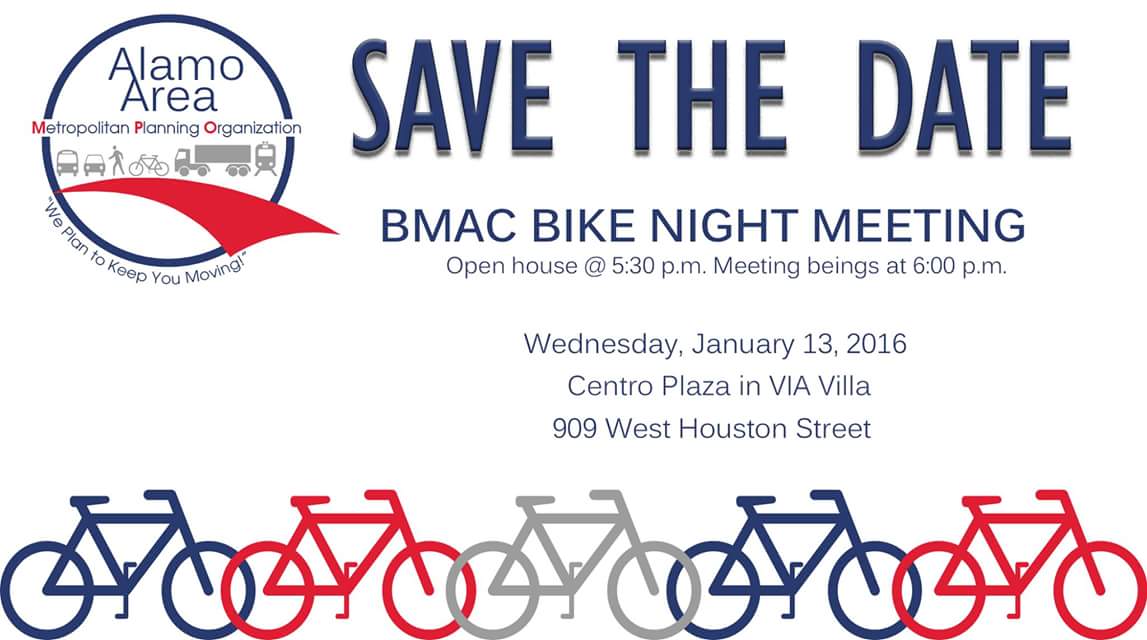
Now he didn't attend the Bicycle Collective meeting, he attended one of the BMAC Bike Nights which happen 3 times a year.  BMAC, The Bicycle Mobility Advisory Committee meet every second Wednesday at 8AM at the Alamo Area Planning Organization, 825 S St Mary's St, across from Rosario's.  All meeting are open to the public, so if you are unable to attend their bike nights, you can try to attend their morning meetings.

After reading his complaints, I got a notification of one of the three annual BMAC Bike Night meetings taking place on Wednesday, January 13, 2016, this time at the Westside Multimodal Center.  Also that night, SA2020 is holding their own meeting called "Realizing the Dream of a World-Class City: Driving Action in San Antonio" which is going to be held at the Pearl Stables. Now since I already spent the money to attend the SA2020 meeting, I guess I'm going there, sorry BMAC.


Now sorry for sounding like a conspiracy nut, but why are both meetings taking place on the same night? Wouldn't the people at SA2020 want the people who sit on the BMAC to be present and give their input?  Even though the person who sent me the message about the SA2020 meeting asking to get lots of cyclist to come to the SA2020 event, wouldn't it be better to have the people who already advocate for cycling be at SA2020 meeting?  It sounds like they don't want anyone who rides a bicycle for transportation to come. Now I'm certain there are legitimate reasons why they just happen to be taking place on the same night and at the same time, but it sounds like they want to keep the cyclist away and focus on what I think Ron Nirenberg wants his plan, SA Tomorrow 2040 to be focus on, alleviating traffic congestion for which I precluded to what SA Tomorrow 2040 was about in the first place back in September 2014.  

Now this is why you need to attend these meeting, because if you're not heard, you're complaints and concerns are not taken into consideration.  Representative Government don't work if you don't go out and vote and attend local government meetings on things you're interested in and effect you. But the question is which one? Just remember the BMAC meeting is free and open to the public while the SA2020 meeting cost $15.